Philadelphia, since 2021
The story of Glitter
Philadelphia has a long history with trash, and no shortage of people who want it fixed. What was missing was a way for a block to pay for the fix itself, every week, without waiting on anyone.
How it started
It started with a block that could not keep finding volunteers
Morgan Berman was president of her civic association in South Philadelphia, and she could not get enough volunteers to keep the neighborhood clean. Asking people to give up a Saturday morning works once. It does not work every week, forever.
She spent two years working with the City on a publicly funded cleaning pilot, and it made it into the budget. Public programs move on their own timeline, and this one did not get off the ground in the window the neighborhood needed. The need did not pause while the process ran.
The question became whether neighbors could fund it themselves, and start this month rather than next budget cycle.
That turned out to be the whole idea. A block cleaning costs about $50. One household will not pay that every week, but twenty households splitting it barely notice. Nobody has to organize anybody. Nobody has to give up a Saturday. A paid cleaner shows up, and the block stays clean.
Local neighbors and businesses funded that first pilot directly, and Glitter launched its first clean block in the summer of 2021. It has run on the same premise ever since: give neighbors an affordable way to pay for a clean block, and pay a living wage to the people who clean it.
Five years on, the City is a partner rather than a workaround. Glitter cleans commercial corridors through Philadelphia's Taking Care of Business program, state and city grants fund cleaning in neighborhoods that were never going to crowdfund it, and our storefront on Market Street exists because of a City program. Neighbor funding was never meant to replace public investment. It was meant to start without waiting for it.
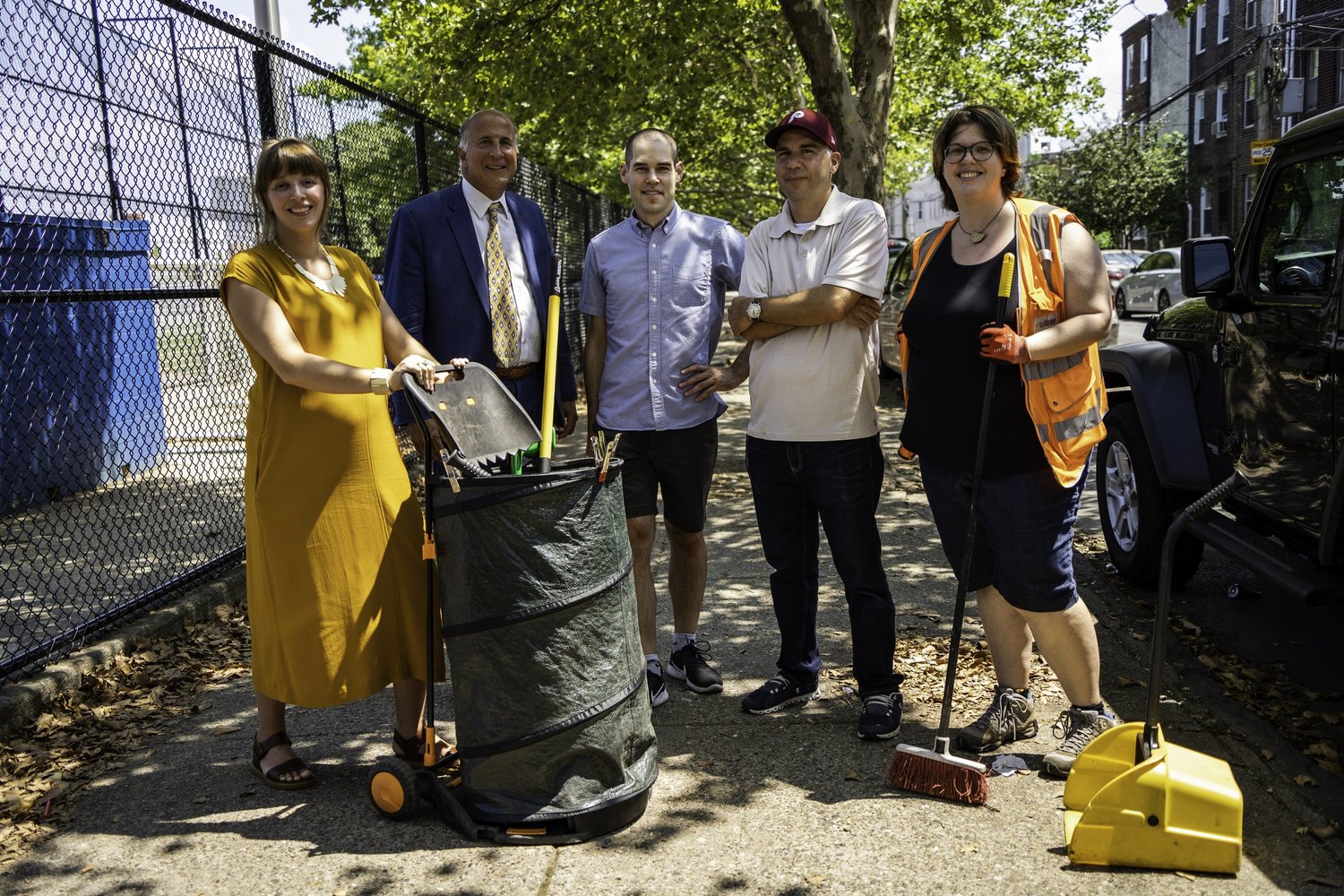
Morgan Berman, then pregnant with her second daughter, with Councilmember Mark Squilla, subscriber Joe Matje, and Emily Rector, our first cleaner. South Philadelphia, in Glitter's first year.
Five years on
What the experiment turned into
The premise never changed. What changed is how much a block can do with it, and how many people turned out to have a reason to fund one.
Blocks cleaned every week
Blocks signed up, waiting to be funded
What one cleaning costs, split however the block wants
Average hourly earnings for cleaners, plus profit sharing
People hired onto the cleaning team since June 2025
The year neighbors funded the first block
Cleaners are hired from the neighborhoods they clean, paid a living wage, and given paid training and every tool they need. We prioritize people with barriers to work, and a record is not a barrier here. That is not a side effect of the model, it is half the reason it exists. Meet the cleaner team.
Alongside the cleaning team there is now a crew of neighborhood ambassadors, all of them Glitter customers themselves, who knock on doors in their own neighborhoods and help blocks get funded. Both jobs are hiring.
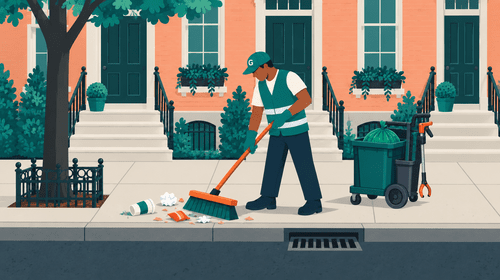
And a block can share more than a sweep now. Each of these is priced for the whole block, with neighbors paying what they can. See all six services.
Litter cleaning
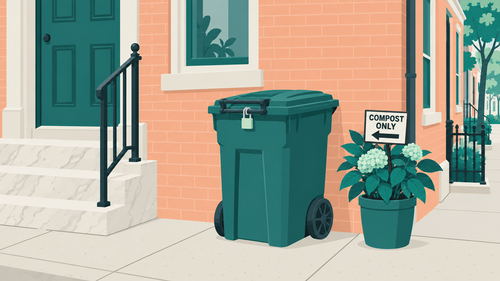
Shared compost bin
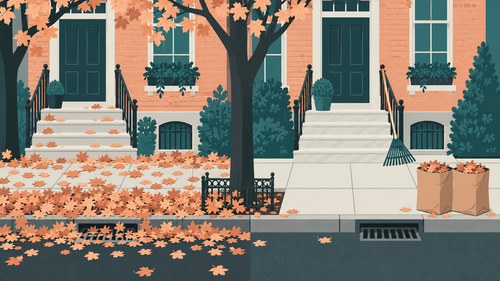
Fall leaf cleanup
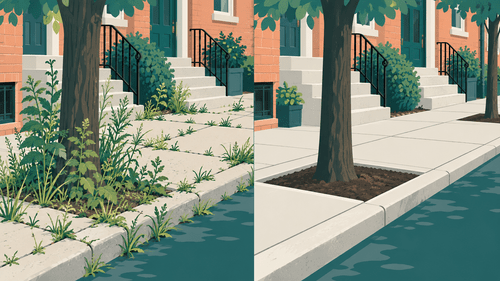
Weed removal
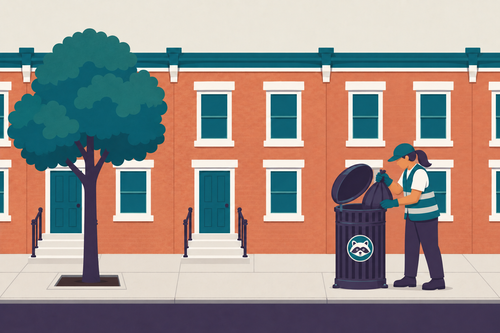
A public trash can
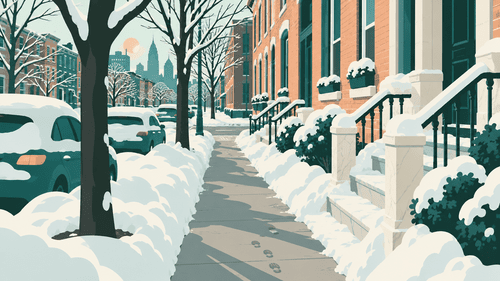
Snow cleanupComing
Who pays for it
It starts with neighbors
Everything else here is a variation on the same idea.
Neighbors on one block
This is the whole model, and still most of what we do. People who live on a street pledge whatever they can toward a $50 cleaning. Four neighbors or twenty-four, the block pays the same total, and every new pledge lowers it for everyone already in. Nobody has to run a committee or chase anyone down.
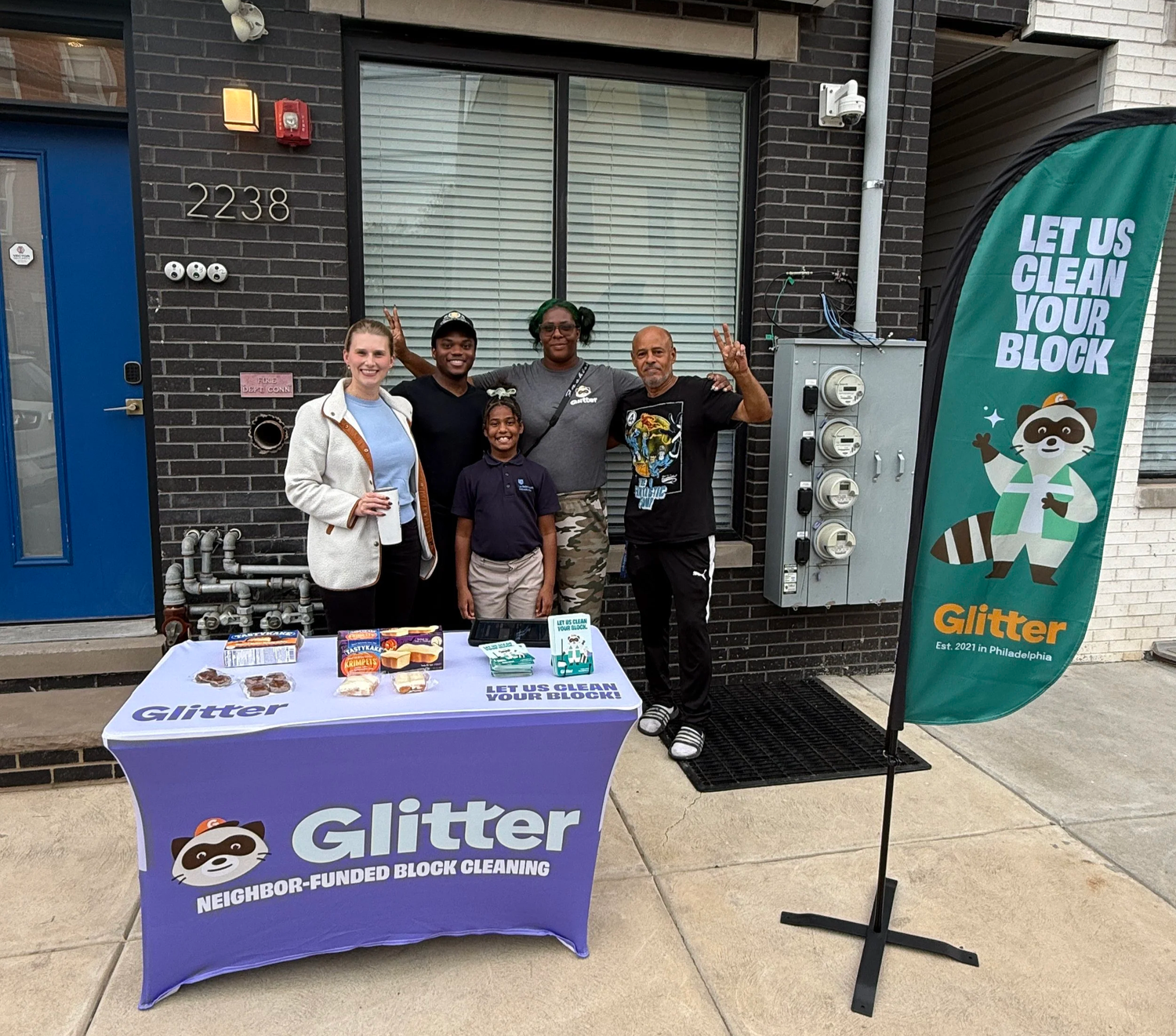
Whole neighborhoods
The Hawthorne Empowerment Coalition brought Glitter to Hawthorne as a neighborhood-wide program, with signs on every block, a standing monthly review, and pledges still coming in. It is the clearest picture of what happens when a neighborhood decides to do this together. See the Hawthorne partnership.
Schools and parents
Home and school associations, parent groups and school administrators fund the blocks their kids walk. St. Joseph's Prep covers three stretches around its campus and two public trash cans. How it works for schools.
HOAs and condo boards
Associations cover the public sidewalk their dues never reached. Residences at H3, Nickel Park and Dickens Square run on recurring service, and RowCal, a national HOA management company, brought us into its Philadelphia properties. How it works for associations.
Landlords, agents and the City
Property owners use it for curb appeal and tenant goodwill. The City routes us commercial corridors through Taking Care of Business, and state grants fund cleaning in neighborhoods that were never going to crowdfund it. How it works for real estate.
What we can show
How you can check our work
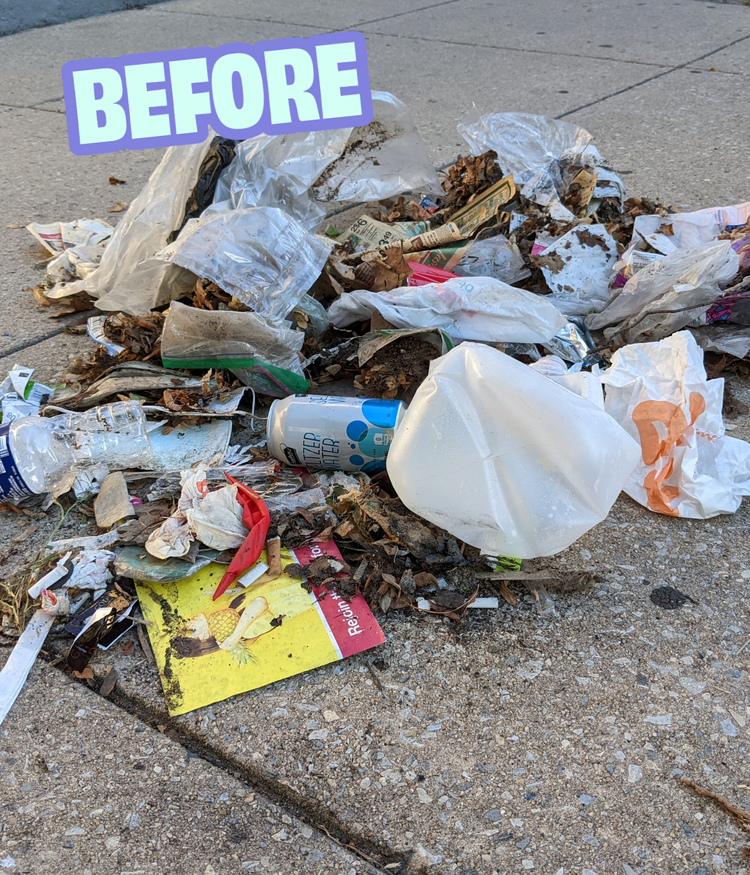
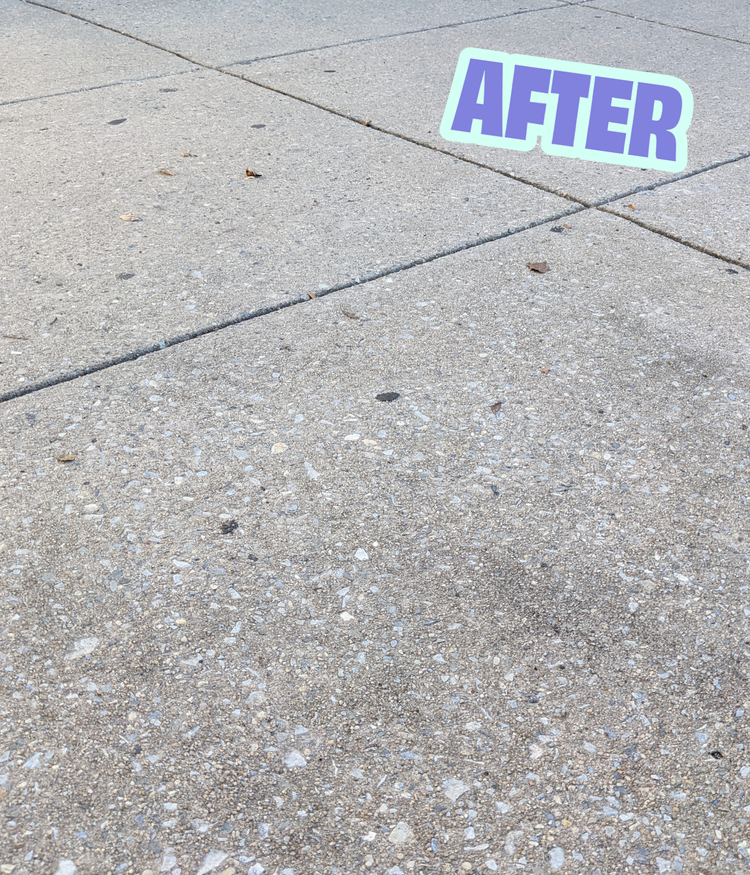
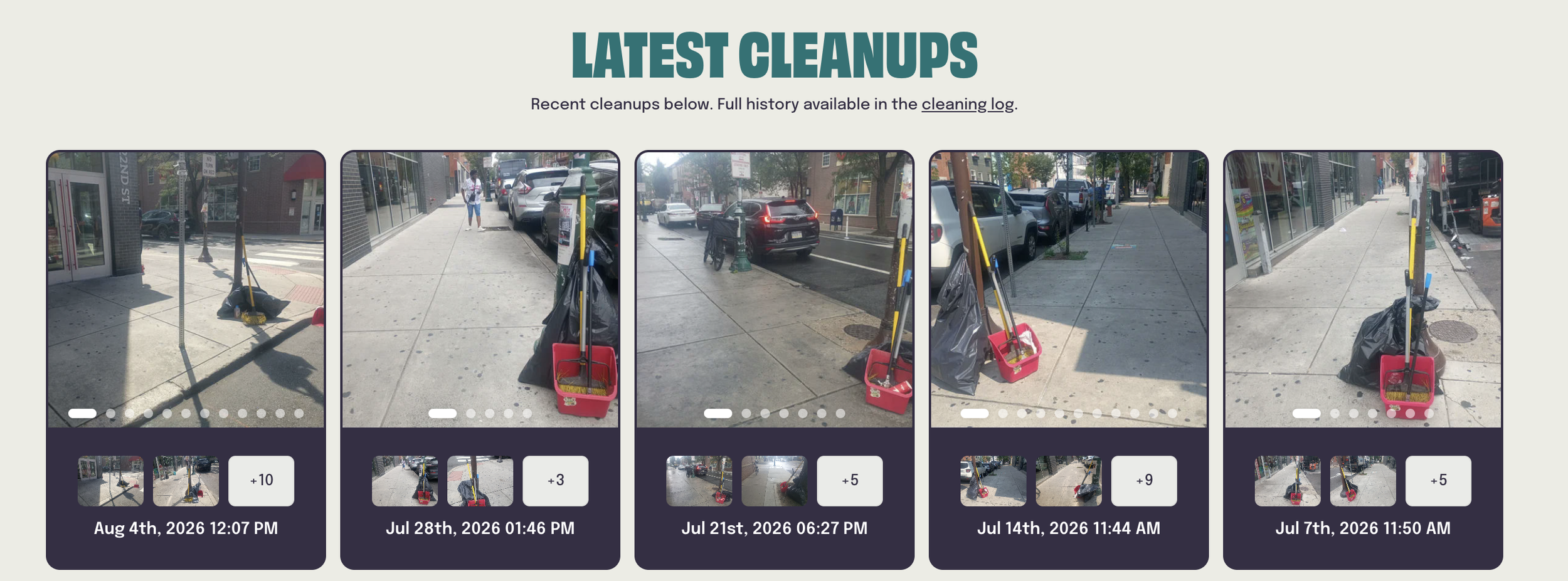
Every cleaning is photographed before and after and logged to the block's own page, so neighbors can see what they paid for without asking anyone. You can look up any block in Philadelphia and see whether it is funded and when it was last cleaned.
Across the city we track a litter level index and an organic debris index, note conditions, and file 311 reports in bulk from what our cleaners find.
Researchers at Columbia and Penn have been funded to study the data. Cleaned blocks have been correlated with a decline in community violence, which is the kind of claim that needs careful study rather than a press release, and that study is underway.
Glitter is a Pennsylvania registered benefit corporation and a member of the Workforce & Justice Alliance. Our work has been funded by the Pennsylvania Department of Community and Economic Development, the Pennsylvania Commission on Crime and Delinquency, and the William Penn Foundation.
The short version
Five years, block by block
-
2021
Neighbors and local businesses fund the first block in South Philadelphia. One cleaner, one street, $50 a cleaning split among whoever chips in.
-
2023
The model spreads by word of mouth, block by block, beyond South Philadelphia. Pay what you can becomes the rule: every new pledge lowers the cost for everyone already on the block.
-
2024
Public funding arrives alongside neighbor funding. State and city grants put cleaning on blocks that were never going to crowdfund it, and crews are working in Fishtown, Fairmount, Olde Kensington and West Philadelphia.
-
2025
Every block gets its own page, with before and after photos of every cleaning and a live record of who is contributing. Glitter starts cleaning South Street through Philadelphia's Taking Care of Business corridor program. Nine months of cleaning in Northwest Philadelphia gives us our first real look at what a consistently clean block does to a neighborhood.
-
2026
Compost, leaves, weeds and trash cans join the list, the compost bins in partnership with Bennett Compost. Hawthorne becomes the first whole neighborhood to do this together. Columbia and Penn are funded to study the data. Glitter turns five.
2026
A good year
- Won the Catalyst grant
- Won the Women's Pitch Competition, from WORC and the Women's Committee for the 250th
- Opened a pop-up storefront at 924 Market Street, inside Circular Commons, shared with Circular Philadelphia and made possible by the City's Meantime program
- Turned five
What's next
This should not only work here
We built this in Philadelphia because Philadelphia needed it, and because it is home. But nothing about the model is local. Any city with blocks, neighbors and a litter problem has the same arithmetic: one household will not pay for a weekly cleaning, and twenty households barely notice it.
Other city administrations have come to us. We expect to be working outside Philadelphia within the next year or two, and we would rather do that with partners who already know their neighborhoods than parachute in.
Fresh partners and perspectives, always
Whether you want your own block cleaned, you fund this kind of work, or you want to bring it to your city, we would like to hear from you.