
Glitter for schools
Let's take care of the block outside our kids' school.
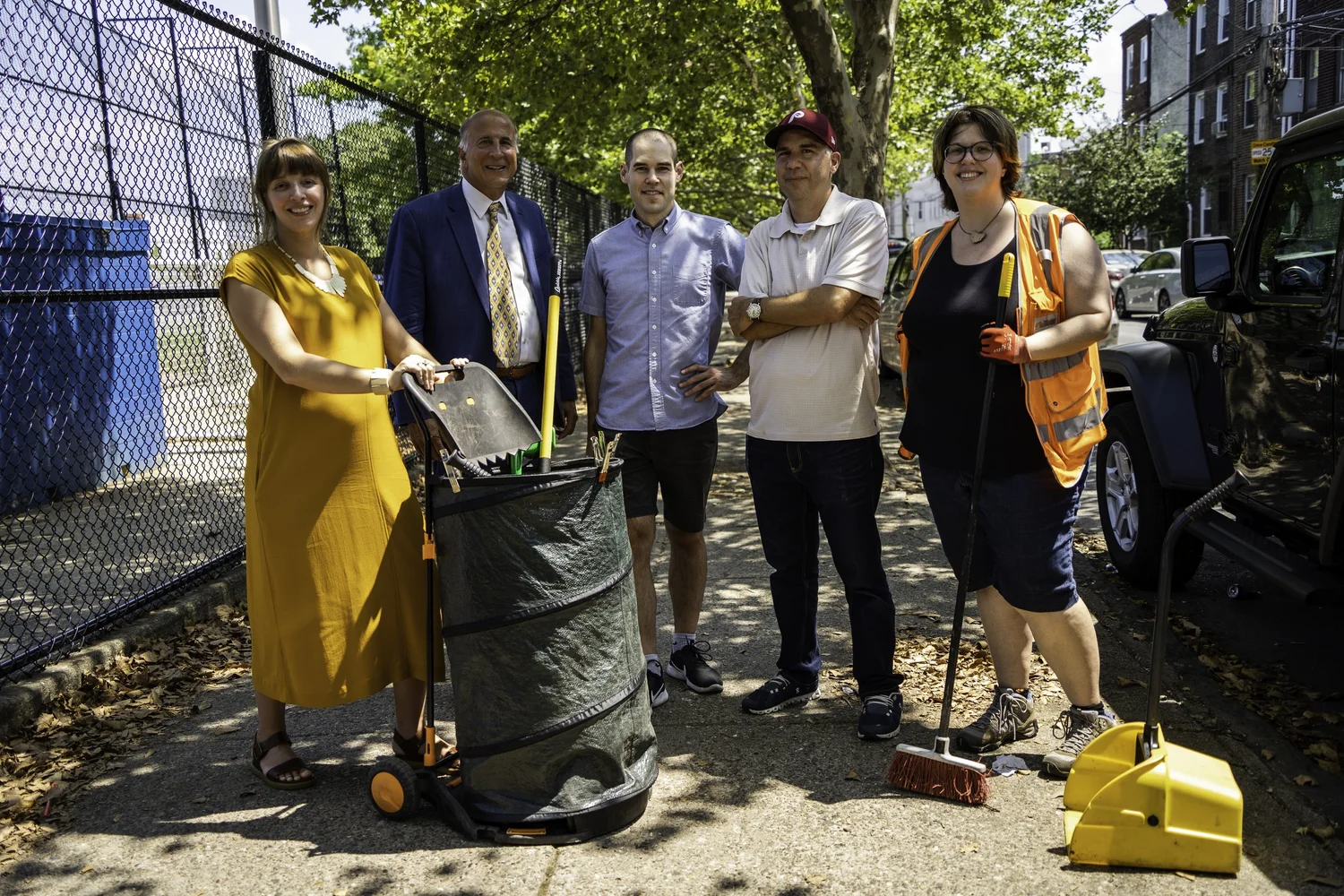
Every school has one: the stretch of pavement the kids walk in on. Wrappers after dismissal, whatever blows out of the cans on trash day, leaves packed into the storm drain.
Glitter pays a local cleaner to look after it every week. Parents, the HSA and the neighbors on that block chip in what they can, and together it is covered.
Start with your school
Pledge what you can
Tell us your school and what you could put in each month. Nothing is charged until enough people pledge to cover the blocks.
Pledge for your schoolOpens an email with four short questions. Nothing is charged, and we come back with the blocks and the schedule first.
Why it matters
Kids notice when the grown-ups take care of things.
They read a block the way they read a room. A clean sidewalk on the way in says somebody is looking after this place, and you are part of it.
It stays undone because it is nobody's job. No one is dropping the ball, the block outside a school just sits in a gap between three people's responsibilities.
School staff are stretched
Building staff look after the building. Nobody's day includes the pavement.
Street sweeping is not sidewalk sweeping
The city sweeps the roadway. It never touches the sidewalk where the kids line up.
Sidewalks belong to the houses
In Philadelphia the sidewalk belongs to the property owner. Outside a school that splits it between a dozen neighbors and the school.
What your school gets
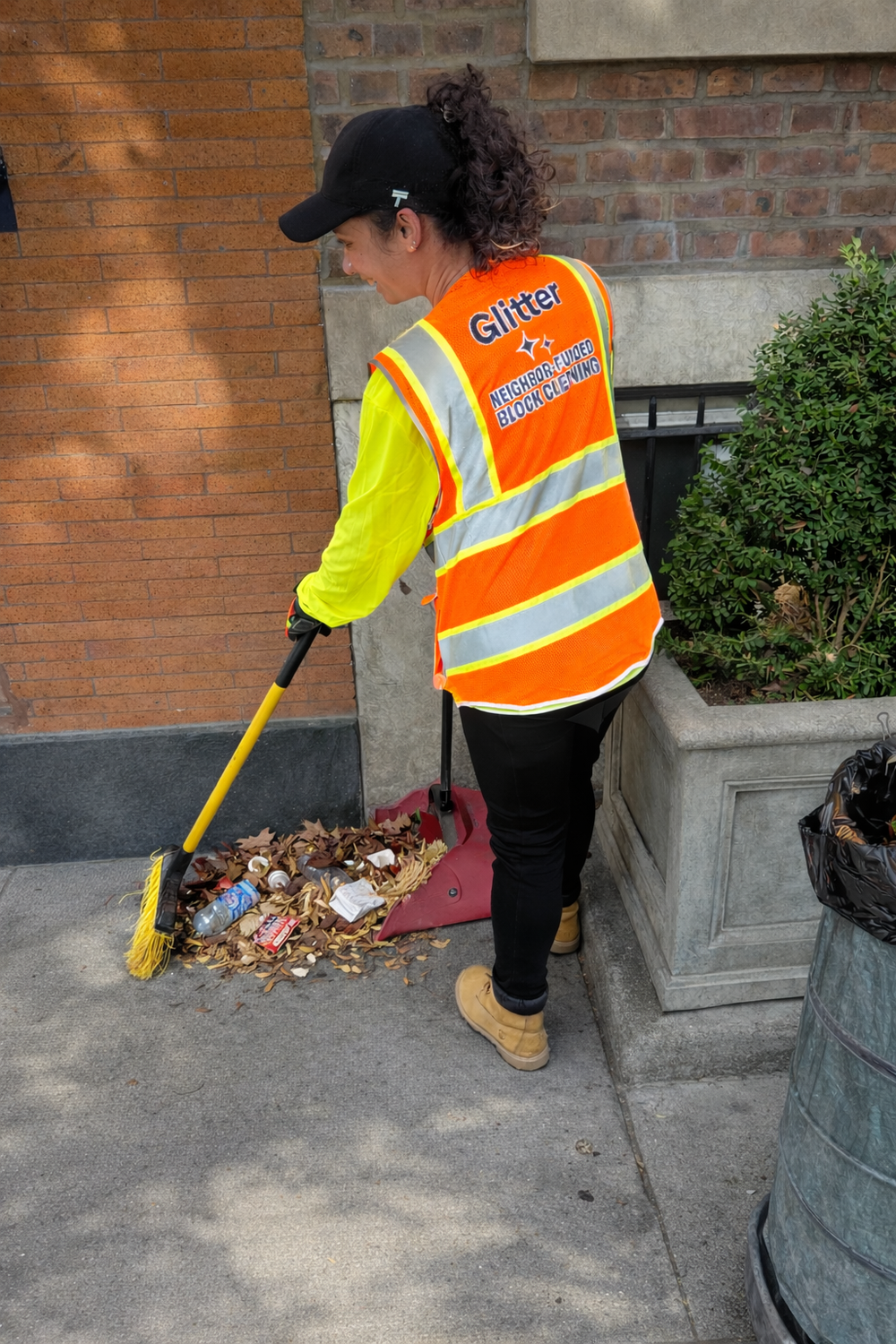
One paid cleaner, the same one each week.
The whole block, both sides
Sidewalk, curb line and storm drains, not just the stretch in front of the doors.
A familiar face
The same cleaner wherever we can manage it, so they get to know the block and the crossing guard.
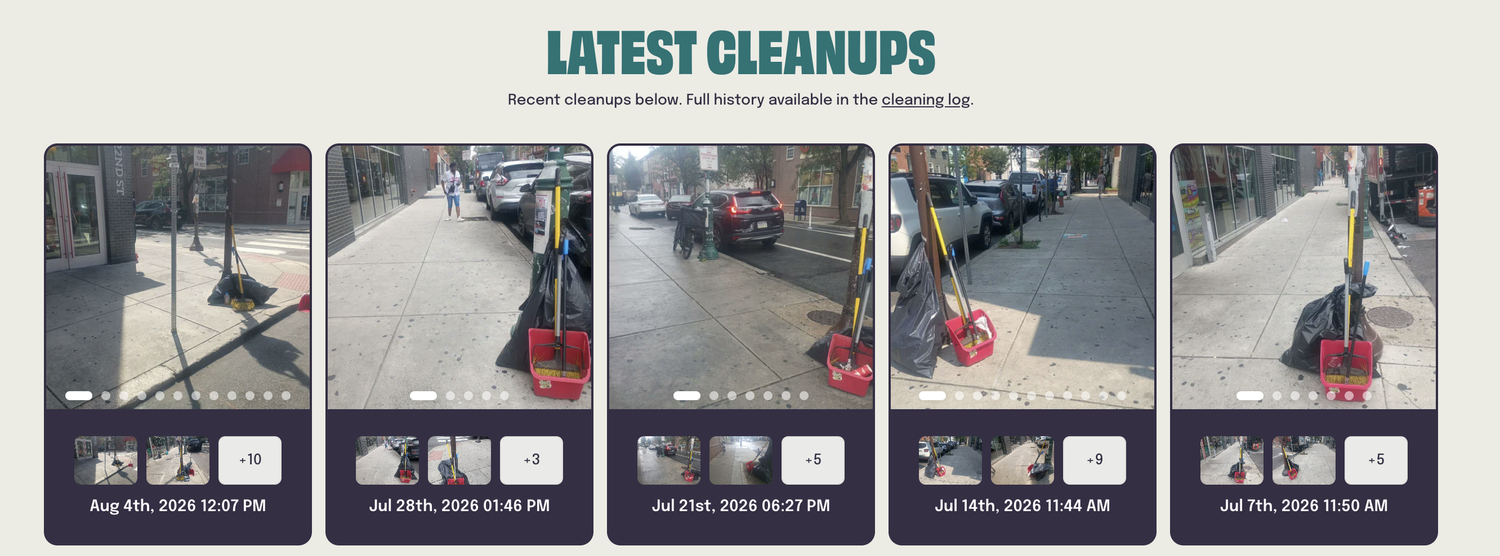
Photos from every visit
Time-stamped pictures on your block's page, so you can see what was done.
311 reports filed for you
Anything we cannot fix ourselves goes to the city with a photo and a location.
Our cleaners are hired from the neighborhoods they clean and paid a living wage.
What it costs
What it costs, billed every four weeks.
Each cleaning is $50 for an entire block, both sides. That is the price whether two families chip in or forty do. We bill on a four week cycle, thirteen cycles a year, so both numbers are below.
| Blocks around the school | Every other week2 cleanings a cycle | Every week4 cleanings a cycle |
|---|---|---|
| 1 block | $100 a cycle$1,300 a year | $200 a cycle$2,600 a year |
| 2 blocks | $200 a cycle$2,600 a year | $400 a cycle$5,200 a year |
| 3 blocks | $300 a cycle$3,900 a year | $600 a cycle$7,800 a year |
| 4 blocks | $400 a cycle$5,200 a year | $800 a cycle$10,400 a year |
Two blocks is the usual start: the main entrance plus the corner where cars and buses queue. A half block counts as half. The yearly figures assume thirteen cycles, straight through. You can pause for the summer and pay only for the cycles you use, which works out around ten.
Nobody is asked for a set amount. Pledges run from five dollars a month to a few hundred. An HSA can anchor it from its budget, a parent's business can sponsor a block, and the neighbors on that block often pledge too.
Some schools just cover it. Not every school needs a pledge drive. St. Joseph's Preparatory School on Girard starts this month on a straight invoice: weekly cleaning on three stretches plus two trash cans. If that is your school, the route is a conversation with your business office.
You can also add a can
A trash can by the gate, emptied every week.
The wrappers at dismissal have to go somewhere. But a can nobody empties becomes a worse problem than no can. So we put the can in and your block's cleaner empties it every week during the cleaning.
Cans go on blocks cleaned every week, since the can is emptied during the cleaning.
| Weekly emptying$25 a week, billed every four weeks, on top of the block's cleaning | $100 a cycle |
| Installing a new canSkipped if there is already a city can we can take over | $700 once |
How it works
Four steps, and you can stop at any of them.
You pledge
Tell us your school and a monthly amount. Nothing is charged.
We come and walk the blocks
We agree the scope with your HSA or your principal and give you the real number.
Your school gets its own page
It shows what is pledged, what is still needed and who has joined. Share it in the class chats.
Cleaning starts
Once the blocks are funded we schedule the first cleanup, usually within two weeks. Cancel any time.
Get your school on the list
Tell us your school.
Parents: pledge, then pass this to your class group and your HSA. On the HSA or running the building? Say so and we will come to you directly.
Opens an email with four short questions in it.
Or book a time with Morgan , which is usually easier if you are on the HSA or you run the building.

I started Glitter because I wanted my own block to look like somebody cared about it, and it turned out my neighbors wanted the same thing and nobody had asked. Schools are the same. If you want this for your kids' school, say so and we will work out what it takes.
Morgan Berman, founder of Glitter, Philadelphia
Questions first? Email hello@shareglitter.com and someone from our team will answer.